
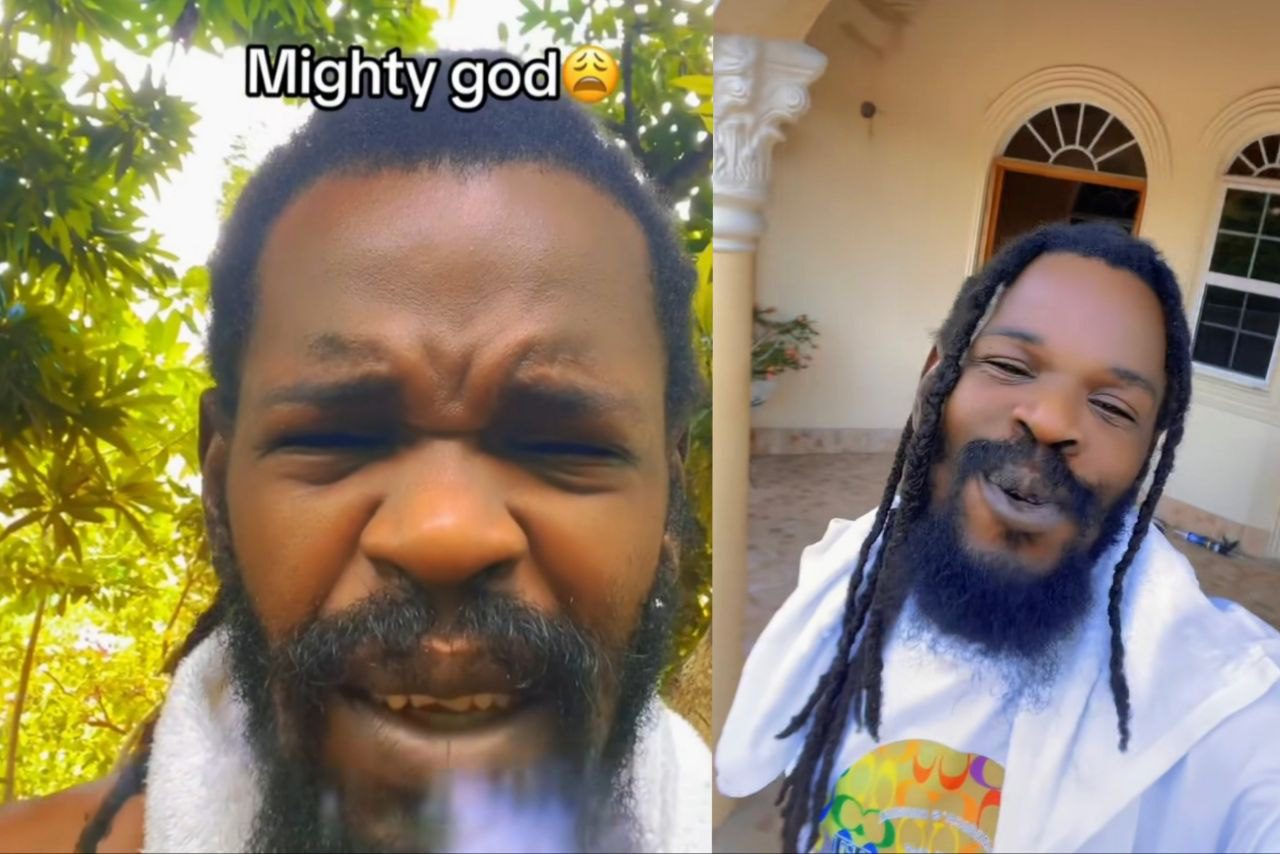
Dancehall personality Ice Koolio, better known online as Shalam, is facing backlash after a transgender woman publicly accused him of engaging in private, adult conversations with her.
The allegations have sparked controversy largely because Shalam has built his online brand around harsh anti-LGBTQ rhetoric, frequently targeting transgender people in his videos. His repeated use of the term “transmissions” a derogatory label he popularized on social media has been widely criticized but also helped grow his following.
That public image is now being challenged following the release of screen recordings said to show private interactions between Shalam and the accuser. According to the material shared online, the conversations allegedly took place on WhatsApp.
Two recordings circulated. One is described as a video call in which Shalam appears on screen while the other participant behaves in a sexually explicit manner. Another clip displays a chat history with a contact saved as “I AM Shalam,” where sexually suggestive messages are exchanged.
In the conversation, the accuser reportedly asked for an intimate photo. The response shown suggests Shalam requested proof first. A separate recording later surfaced showing what appears to be a suggestive image sent using WhatsApp’s “view once” feature.
Outside of social media controversy, Shalam is also a recording artiste. He gained wider recognition from his song “Kum Dung Now,” released three years ago, and built around his viral catchphrase.
He currently commands a sizable online presence, with over 147,000 followers on TikTok and 82,000+ on Instagram. His visibility in dancehall circles has also increased in recent years, including public appearances with Popcaan and a live performance alongside Vybz Kartel, where he performed his viral hit before a large audience.
As the clips continue to circulate, public reaction remains divided, with critics accusing Shalam of hypocrisy while supporters question the authenticity of the leaks.